Category Archives: square foot gardening

Square foot gardening in the winter

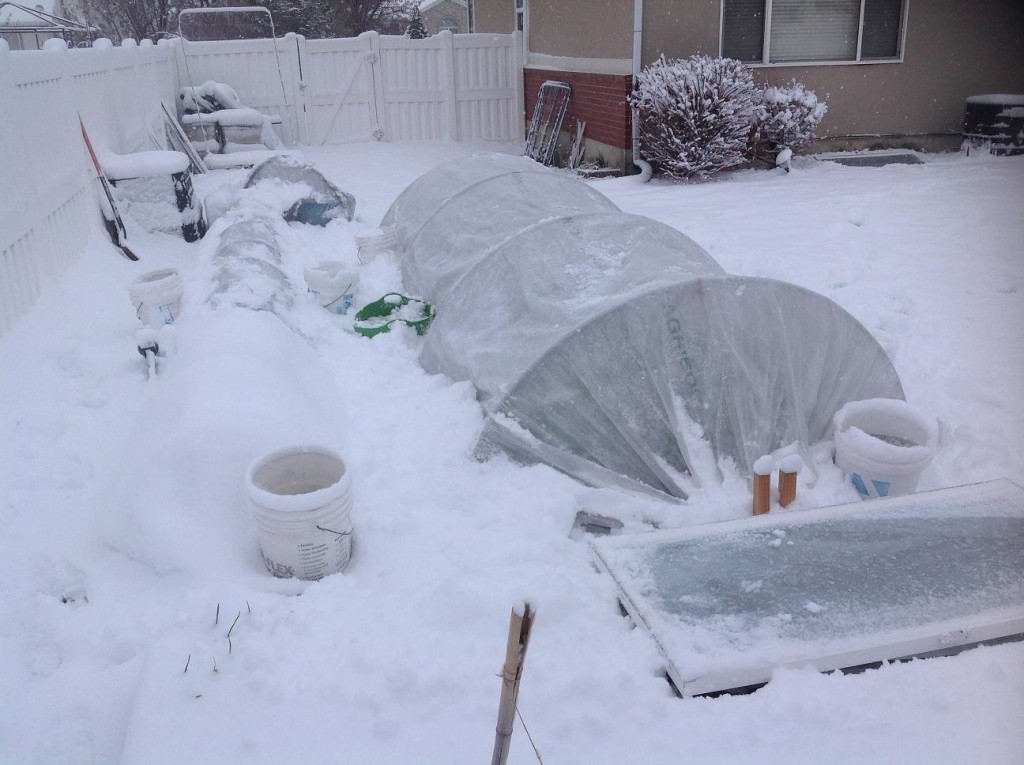
january 31, 2015 winter gardenAlthough we’ve had a milder winter, we’ve still had a few significant snow storms this year. One delivered 8 inches of snow and then one a week later we got 4 or 5 additional inches. Today it’s forecast to be in the high 40’s to low 50’s.

I’ve kept a close eye on the evening temperatures with my high/low digital thermometer under the covers. I know there are expert farmers/gardeners who claim that for every layer of protection you move your garden a USDA zone and a half or 500 miles to the south . Since I’m in zone 6B, that would make my gardens the equivalent of zone 9 with my double coverage. That would put me on par with the thermal belt of California’s central valley. Click here to see what folks in zone 9 are growing at this time of the year. There is no way I can come close to what they’re doing. Not right now.

What I think is most important is the “Sunset Zone Considerations” list. As this article explains, the difference between USDA and Sunset zones are very important. While the USDA categorizes zones by the winter low temperatures, the Sunset zones take into consideration many other important factors. The influences listed-altitude, mountains, hills, wind,continental influence, ocean influence(vastly different from east coast), etc. can have a significant effect on winter gardens. If you’d like to grow something through the 6B winter and are of the thought that a simple double cover of plastic and floating row will take you to zone 9-give it a try! You’ll be sadly disappointed.

I did find, however, that my cold frame covered with a simple glass window did a much better job of keeping warm than my double covered square foot garden beds. The challenge with the cold frame is you’ve got to have many of them to take you through the winter. And you must remember to vent them if it’s sunny and gets past 45 degrees.

If you live in a climate where the winter temperature gets below 15 degrees or colder-the lower limit for quality winter salad crops-it becomes even more important to choose the proper things to grow. By minimizing the size of your garden as we do in the square foot gardening system, you can have a different garden by protecting it from the real destroyers of crops-wind and the continual freezing/thawing of crops. With the ability to do just that with your square foot garden, it then becomes a simple matter of crop selection.[ois skin=”1″]
My season has begun

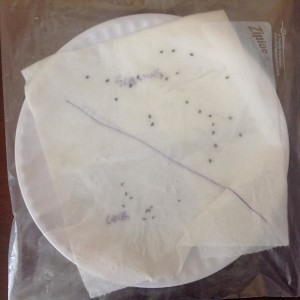
sprouting chive and scallions seeds on January 3, 2015.  Square foot gardening planning for the spring season has begun. I recently had a note from someone informing me this method simply doesn’t work as a way of sprouting seeds.  I’ve had nothing but success doing it this way for a decade.  What could be easier?  If you were to put these seeds in the ground right now who knows how many would come up?  Freezing temperatures, snow, wind, etc.  makes this difficult to pull off by planting outside if you live in a northern climate.

Seeds only need two things to germinate-warmth and moisture.  By putting only a small number of seeds on a paper towel, spraying them lightly with water, and then placing them in a closed ziplock bag, you’ve provided them with one of the essentials-moisture.  All you have left to provide is the warmth.  I just place this on top of a filing cabinet in one of the bedrooms and wait.  In a matter of a few days(depending on the crop)you’ll see them swell and then start to grow a small “tail.”  I’ve posted pictures of what this looks like previously.

Once that happens you now have to provide the last thing for them to start growing-light.  Use a pencil or tweezers to lift your seedlings off the paper towel and into growing cells.  I don’t handle them with my fingers because their too fragile.  Cover them with a fine layer of soil, drop the light source about an inch over the height of the plants and keep the soil moist.  Because there’s no top over the soil it can dry out quicker than you might expect.

The reason I prefer this method is twofold.  First, whatever sprouts will grow.  Planting seeds directly into outside soil at this time is risky.  This takes all the guesswork out of the equation.  The other reason is time.  Depending on what you’re planting outside it might take 3-4 weeks to germinate. With few exceptions, the items I grow germinate in a week or less.  It’s a great shortcut.

My focus now is past the four season garden.  Winter has been a lot of fun but it’s now time to plan my square foot garden.  I’ve got plenty of finished compost left over(and covered)from last year to start doing things outside.  And there are several crops that will germinate even during this part of the year.[ois skin=”1″]

Lots more winter coming

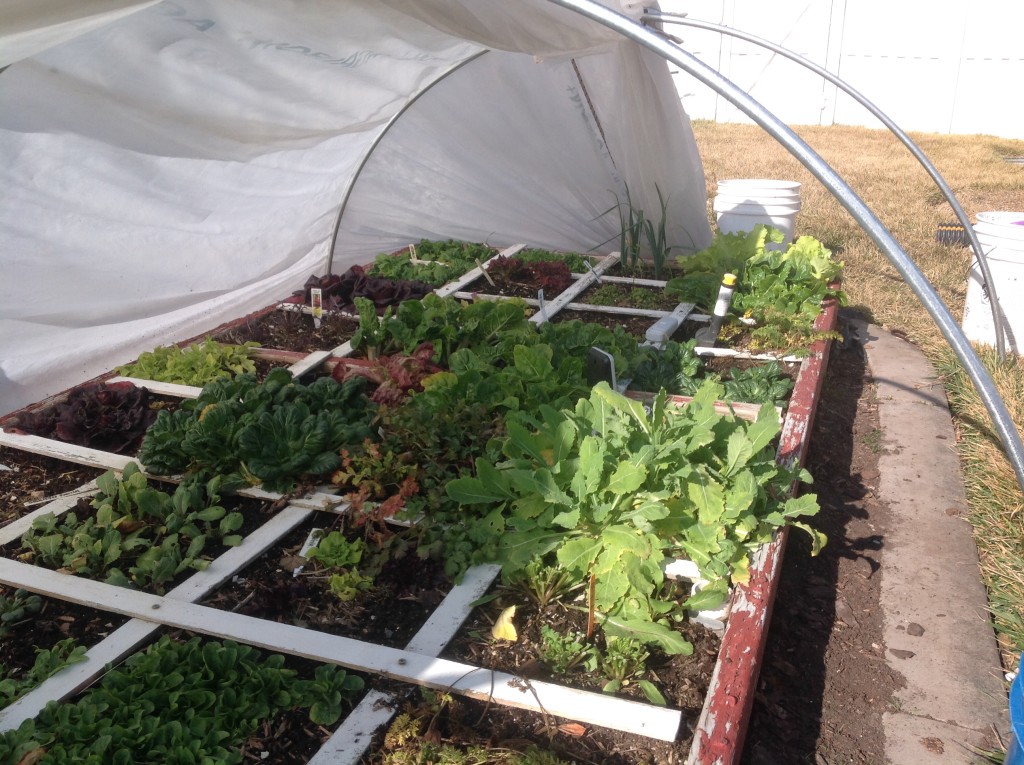
square foot garden with four season protection

What a mess!  The days get longer, the snow is coming and it’s just freezing out there!  We awoke to a white Christmas with 5 inches of new snow!  We’ve got more on the way and we’ve also got a few nights dipping into the single digits!  The seed catalogs have arrived and I’ve been marking up every single one of them with all the fancy new things I want to try this upcoming year.

By the way-do you get Johnny’s catalog?  There’s this new item they have-Mexican Sour Gherkins.  They look so cool!  They’re miniature cucumbers that you harvest when 1″ long.  They taste like cucumbers with a citrus and tangy overtone.  Anyone ever tried them?  I noticed Niki Jabbour has talked about them on her Facebook site.  I’m not sure I’ll be growing them but they do look interesting.  I don’t know any neighbor gardeners who’ve grown them and I don’t know any square foot gardeners who’ve tried them.  I’d be interested to know if any of you have?  If so, let me know what you think.  I’m always up for trying new things but they have to be productive. The square foot gardener might not have a lot of room so space is at a premium-at least it is for me.

But the fun can begin right now if you’re ready!  If you’ve got your four season garden protection up there are things that you can plant-right now.  It’s true that many things are impossible to germinate in the winter, but there are 7 crops I’ve been successful with in the winter.  And with the empty spaces that are appearing in the garden because we’ve been eating out of it all winter, it’s time to replant.  And that’s exactly what I did this afternoon.

Don’t let the winter blues get you down.  There’s still much you can do!  Plantings of cold weather crops, collecting material to add to your compost bins,  and gathering seeds for the spring season are all fun activities to get you through the depressing winter months.

And even more, use the winter months to learn all you can about how to be a better gardener.  I ran across this nifty piece on twitter that I thought was informative.  Reading things like this all winter long will do nothing but add to your garden knowledge.  Hope you like it.  Cheers! [ois skin=”1″]

Winter garden lettuce

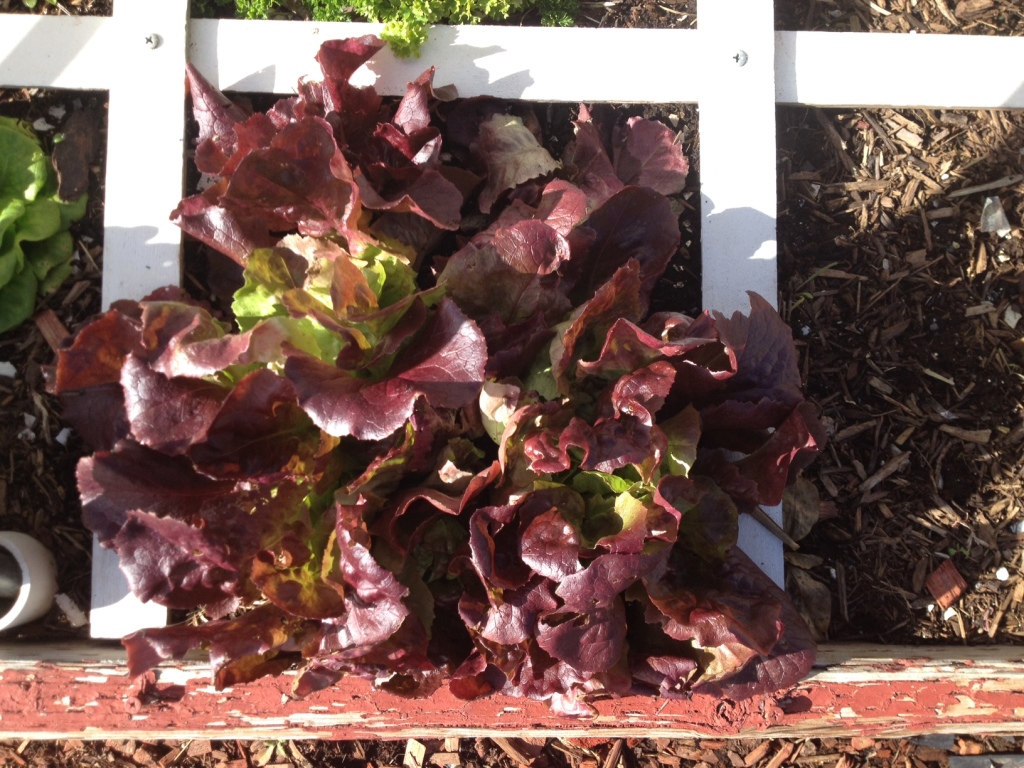
winter garden lettuceFirst week of December and no garden work to do!  I’m very bored and anxiously awaiting the seed catalogs to show up in the mail.  The winter hasn’t been too bad yet-only a few inches of snow and about 10 days of below freezing temperatures.  This head of lettuce-it’s remained this size for close to a month.  And with the shortened days and colder weather, it won’t grow.  It will sit there and hibernate until it’s ready to be harvested.  My garden becomes a very large refrigerator for our family in the winter.  If you’re able to match the right crops with the right planting schedule, you can eat all winter long.  Four season gardening is very possible in zone 6 and I think it’s the most fun and enjoyable because there’s literally no work.  What could be better than that?[ois skin=”1″]

Composting

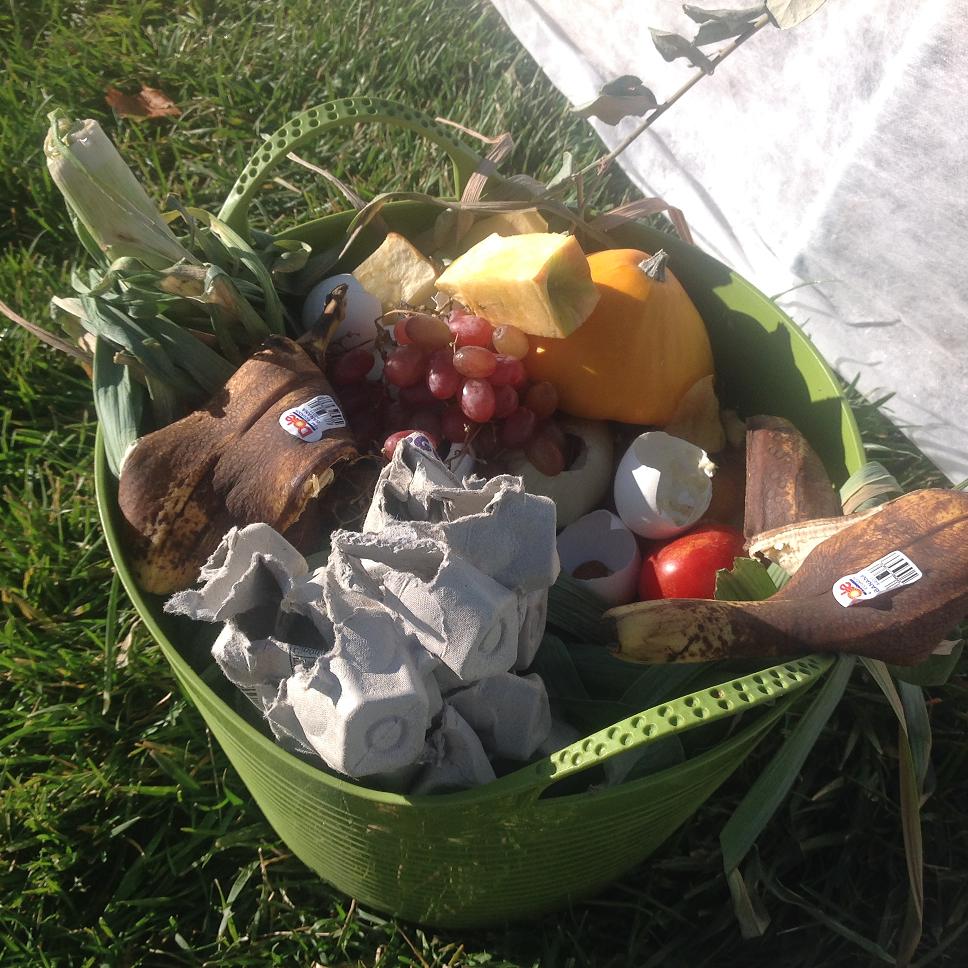
compost ingredients 2014Making your own compost is a very easy thing to do-much like everything else in the square foot garden.  You can make it complicated by using formulas, ratio’s, etc, but it all really boils down to just doing a few things correctly .  Gathering the right kind of material is the first step.  The greater variety of ingredients, the greater the finished product will be.  Looking at this container shows a small sampling of how easy it is to gather compost material from your kitchen.  Here’s what I see: grapes, leeks, banana peels, eggs, tomato tops, apple core, zucchini, and an egg carton.  You can bet there’s more under what we do see, but that’s 8 different things, one of which is counted as a “brown” ingredient-the egg carton.  The way I do it is to simply balance the amount of greens with browns.  Seeing this is mostly green ingredients, I’ll dump this in the compost bin, and then I’ll fill the green container with nothing but brown items-something like shredded paper.  That way you’re assured of a good balance of nitrogen(green)and carbon(brown.)  Then it’s a matter of taking care of the pile-keeping it moist and turning it as often as you can.  The more  frequently you turn it, the faster you’ll get it.  I’ve done it this way now for 15 years and I’ve never had a problem.  I’ve never spent a dime on fertilizer and everything grows in my garden.  If you don’t get the soil right nothing else will really matter.

[ois skin=”1″]