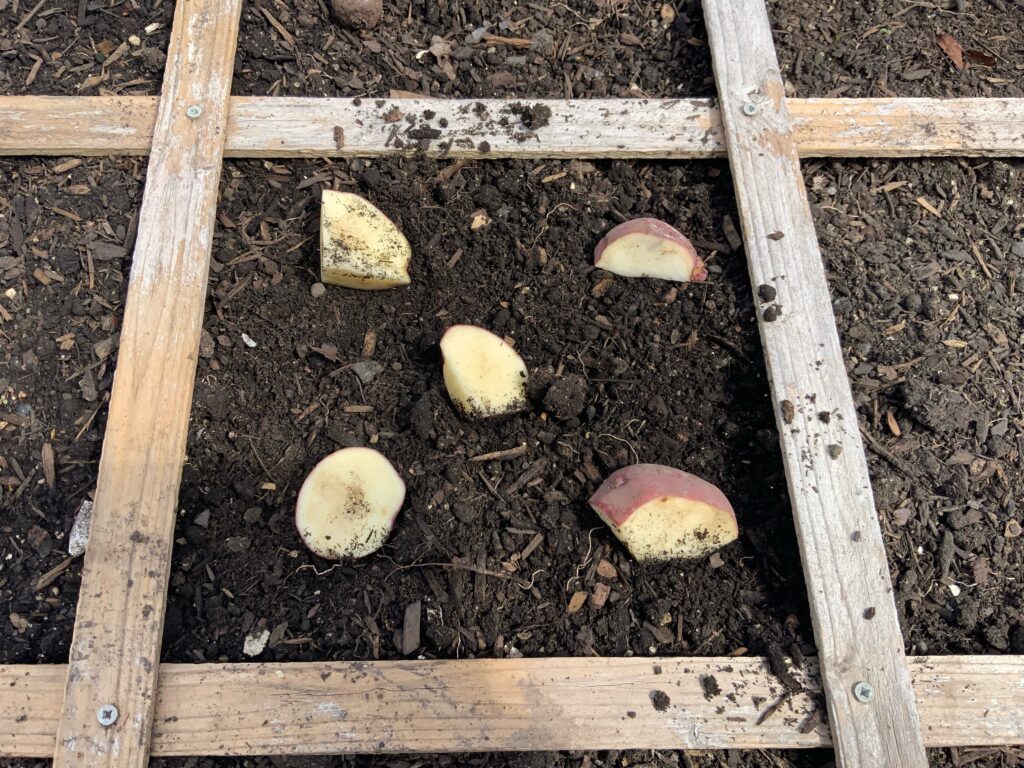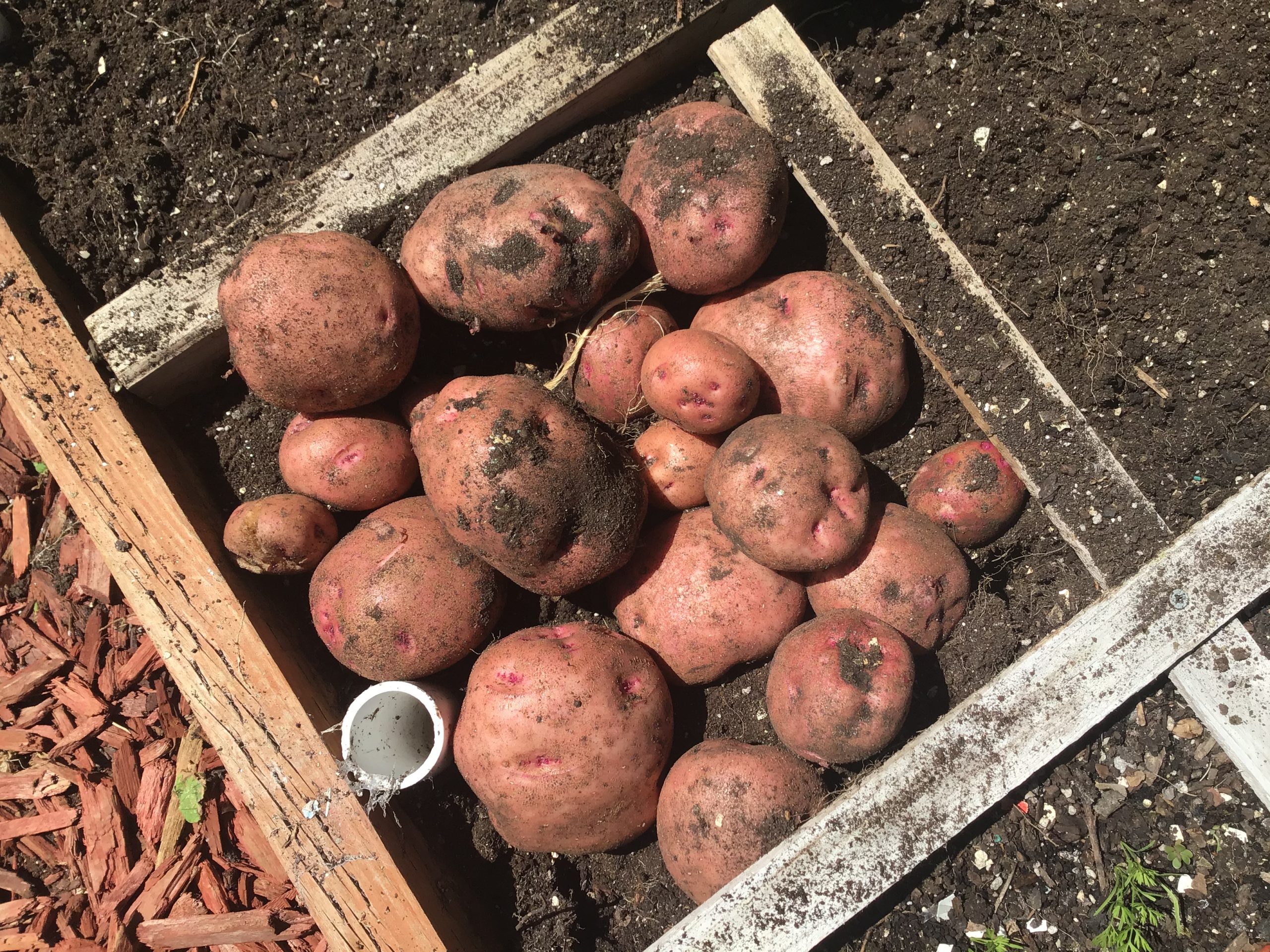
Here in zone 6 we’re pretty much in the clear for anymore frosts or hard weather. As it starts to warm up-and it was 90 and high 80′s the past two days-it’s about time to start thinking summer garden time. I’ve got about another 3 weeks of harvesting all the leftover spring crops. Two nights ago I replanted 10 squares with summer crops. If you’re interested in an easy and great crop rotation plan, you might consider my eBook where I talk about this. It’s all easy and it minimizes the likelihood of pests, critters, and diseases. But now is the time to start planting things like tomatoes, beans, peppers, cucumbers, varieties of cut-and-come again lettuce, zucchini, the other squashes, and finally corn! I like to throw in a flower or two not just because of looks but to also attract pollinators to the garden. My preference for this is bachelor buttons. They do the trick, last a long time, and look great. As a side note, I’m now a bee-keeper. It’s been fun to watch and the greatest part is I don’t get stung! These bees are great for pollinating but they’re not aggressive and they don’t have a hive to protect. But they don’t make honey so I miss out on that one. I also miss out on bees stinging the neighborhood kids and creating a whole other host of problems.
Pretty good looking head of poc choi
So easy
The SFG method is so easy. You can take all sorts of classes, become a certified instructor, read a lot of books on it(a great thing), teach others how to do it, etc. But it’s all just this simple: build a box, fill it with Mel’s mix, put a grid on it, and then start planting with the 1, 4, 9, 16 spacing. Keep your gardens watered correctly and bingo-that’s it! I’ve been harvesting all year at this point with no break and now the efforts are starting to pay off. I’ll keep my gardens covered at night just in case it gets a little too cold, but the hard work of covering and uncovering every day is coming to an end very soon. Several of the summer crops are already in-tomatoes, cucumbers squash, and peppers. If you live in the Salt Lake City area, keep an eye out for the upcoming SFG “Lite” classes. You can find more information about them on the site. Can’t wait for the summer gardening season…
You don’t have to buy new seeds every year
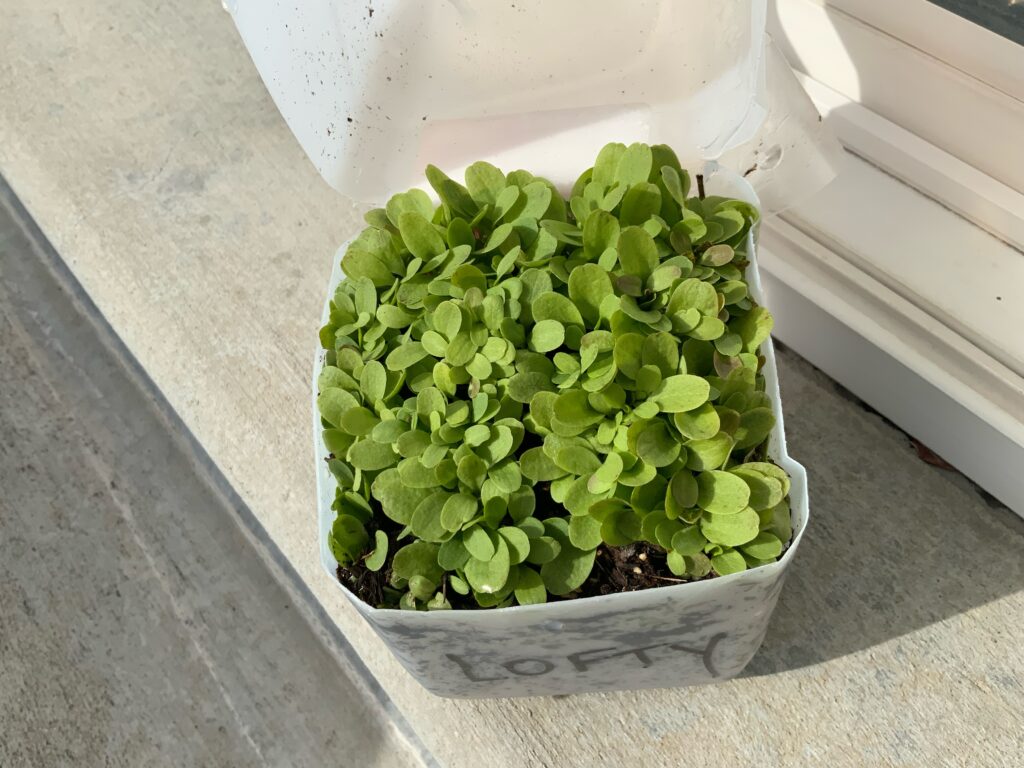
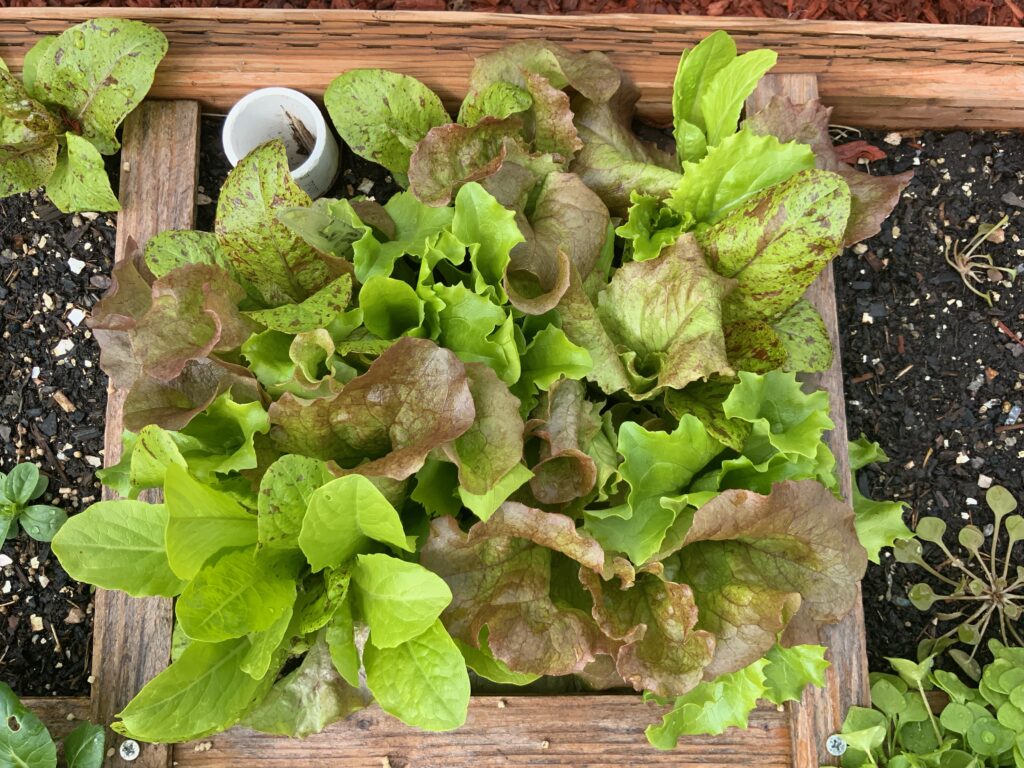
This time of year finds many of us out planting away with some brand new packets of seeds. In the square foot gardening method, we only plant what we intend to eat, in other words, if we know we will eat 20 salads in a week we will only plant 20 seeds(5 squares.) And if you’re not that confident that your single seed in each hole will come up, maybe you’ll plant 40 seeds. Either way, you’re still going to save 98% of that seed packet during your first year. If you went into a nursery and told them you’ve got some seeds left over from the previous year, you know what you’re going to hear. “Those are no good-you’ll need to buy some new seeds.” My experience, as well as many others, says otherwise. Seeds need three things to grow: warmth, light, and moisture. To store your seeds so that they will be good for many years down the road you simply reverse that process. You’ll need to store your seeds in a place that is “cool, dark, and dry.” That usually takes us to the crisper section of the refrigerator. Done this way, you will have seeds that may last up to 10 years! Right now I’ve been able to sprout tomato seeds that are 10 years old this year. Many of my seeds are 4, 5, or 6 years old. While it’s true that you lose a percentage of viability over time, all that does it tell us that we will not be planting 2 or 3 seeds in each hole, but maybe more like 6 or 7 if the seeds are really older. It’s not necessary to buy seeds every year, although the temptation is almost too much to take when the seed catalogs start arriving in the dead of winter. This picture shows concept lettuce which was started with seeds that were 5 years old.
Great composting
Making compost is not only a lot of fun, it’s also very easy. And you can’t buy compost as good as you can make in your own backyard. One of the best parts about homemade compost is that it’s all free! I spend quite a bit of time attempting to explain how easy it is to make your own. I know there’s a lot of expertise out that that might be of value, but you don’t need a lot of knowledge to do it correctly. In the SFG system, we use a basic mix of course vermiculite, peat moss, and a blended compost made up of at least 5 different ingredients. This mix has gotten to be very costly-about $70 per 4X4′ square. But it’s only a one time expense. If you make your own compost you’ll never need to spend another cent on Mel’s mix. If you choose not to make your own compost, you’ll always need to have access to some commercially available compost. As you read from previous posts, my favorite commercial compost is made by Gardener & Bloome. It’s got about 10 different things in it, and then I add all of my extras-egg shells, banana peels, orange and lemon rinds, moldy strawberries, old grapes, potato and carrot peelings, dried grass, dried fall leaves, horse manure, etc. You can see how easy it is to get to that minimum number of 5 ingredients. If your interested in learning what you need to know about composting, there’s an easy chapter on how to do it in my ebook which you can find on my site. While at Home Depot today, I ran across this brand of compost-Kelloggs. It too looks excellent and is very similar to the ingredients found in the Gardener and Bloome product. I know there’s formulas about how much of what to add in order to make compost. You don’t need to know all of that. I’ve had tremendous results doing it the way I’ve done it for 13 years. I just layer everything together, make sure I mix it well, mash all the larger pieces, and then moisten it to resemble a rung out sponge. In 6 weeks I get a great compost blend-something no store bought package can offer. One good season of successful composting under your belt will have you asking yourself:”why haven’t I been doing this all along?” Learn how to do it so you don’t have to spend another dime on buying the commercial brands at the stores.
Pok choi in the square foot garden
Here’s a little something for you to consider growing in your SFG’s. It’s pok-choi-a popular Asian green. This particular variety is called “Win-win” from Johnny’s seeds. There’s many varieties available, but our family loves this the most of all those we’ve tried. Delicious in stir-fry’s, it can also be used as part of a mixed salad with other types of greens. It’s easy to grow-especially in cooler temperatures. If you want to grow it in hotter weather, you’ll have to water it twice as much and the pests have a tendency to attack during the warmer months. I only grow this in spring and fall. In the SFG system, you plant 4 of these per square. I’ve written much about how much money you can save by growing things at home. I think everyone believes that. The price for this in your organic produce section of the store will run about $2.50 per head. And those aren’t quite as big as these and certainly not nearly as fresh. Last of all is the quality and taste of your food out of your backyard grown in perfect soil. I haven’t spent hardly any time on this point, but the composition of your soil has a lot to do with the taste of whatever you’re growing. This stuff is great…give it a shot-you won’t be sorry.
April 14th square foot garden
It’s hard to believe that this was all planted in the coldest part of the year. In just a few short weeks this will all be emptied out and an entirely brand new set of crops will take their place. I’ve really enjoyed-and so has our family-eating some different tasting(and sounding)greens that I’ve never grown before. This upcoming fall, I’ll be able to share specific information about 15 different cold weather crops that I’ve had experience with. Many of these are items that many might not have tasted much less grown, but are easy to plant. Done right, you should be able to harvest right through the winter in zones 3-6 with just a little extra effort. I don’t mind doing the extra work because the quality and taste of the food is so superior compared to store bought during these months. I’ll be able to share how each of these crops fit into the 1, 4, 9, and 16 spacings. This square foot gardening stuff-it sure is a lot of fun-and a whole lot less work.
Salad in a glass
Anybody ever seen one of these before? We’ve had it for a few years because our daughter refused to eat the garbage being served in high school. She wanted something fresh and nutritious. She came home one day with one of these gadgets. It’s a plastic glass that holds the salad greens and then the dressing is stored in the top of the cap. I was on my way to one of my SFG classes last week and didn’t want to stop anywhere for fast food. I went and found this and put it to use. All I needed to do now was go out into my square foot garden, pick some tasty salad greens and head off. I snipped some mizuna, spinach, some tatsoi, arugula, and 1 radish. I cleaned it all off, cut it up and put it all in this nifty little cup. I filled the top of the cap with poppy seed dressing, topped the whole thing off with a small amount of mozzarella cheese and croutons, and off I went. About 30 minutes up the street I pushed the top cap which releases all the dressing into the container, shook it a bit, and then went to eating. Clean, healthy, fresh, and some of the best tasting salad greens you’ll ever have-right at your fingertips. Who cares if I was eating it while driving?
The seasons first SFG workshop
It’s always a little tricky to see how early you can be ready to pull off one of these square foot garden workshops. Today was perfect-about 60 degrees, even warmer as we finished, and sunny. To fit one in by the end of March is pretty good for us. I spend 3 hours on this workshop and by the time we’re done, people leave with a small gift, and they know everything to have a great square foot garden. All the advanced techniques are discussed and shown, along with a few “tasty” treats along the way. I was lucky enough to have 3 suckers from a tomato plant that I’m growing. I simply cut it out and rooted it in one of my potmaker cups and gave them away. This was a Sun Gold cherry tomato plant-one of the sweetest tomatoes you’ll ever taste. I think they all got to taste arugula, mizuna, tatsoi, and minutina. Some of them were pleasantly surprised by the flavor of these lesser known salad greens. We also had someone who wasn’t ready for the arugula pepper taste-when you grow it in cooler weather it tastes strikingly different that those varieties that have been grown in warmer soil. If you’re interested in learning more about these workshops, feel free to contact me. All participants have already attended a 90-120 minute introductory class so we don’t have to waste a lot of time answering questions about content that they’ve already learned. I was able to have an unbelievably great garden last year. I think this year it will be even better-you never stop learning how to do things.
Mizuna in the square foot garden
Here’s a little something for you-an Asian green called mizuna. If you’ve never grown it in a SFG-and I don’t know anybody that has around my neck of the woods, it’s a wonderfully lemon tasting green to add with all your other salad greens. You’ll taste something different but won’t be able to put your finger on it. I planted this successfully, from seed, in the coldest winter we’ve had in over 5 decades. We’ve actually been picking at it a little bit already. Based on how’s it’s grown I think the best spacing would be what you see here-9 per square. These will get larger so I think the 16 plants per square would be too close. I just can’t believe it’s grown this well-proving the point that if you plant the right kind of crops and match it to the right season you can probably grow all year long. Here in zone 6 that takes a little extra work, but I can tell you, it’s well worth it. Nothing like going out to the garden, uncovering a layer, and snipping off some freshly harvested salad greens. We’ve had some remarkable salads almost all winter long.
Revving up your square foot gardens
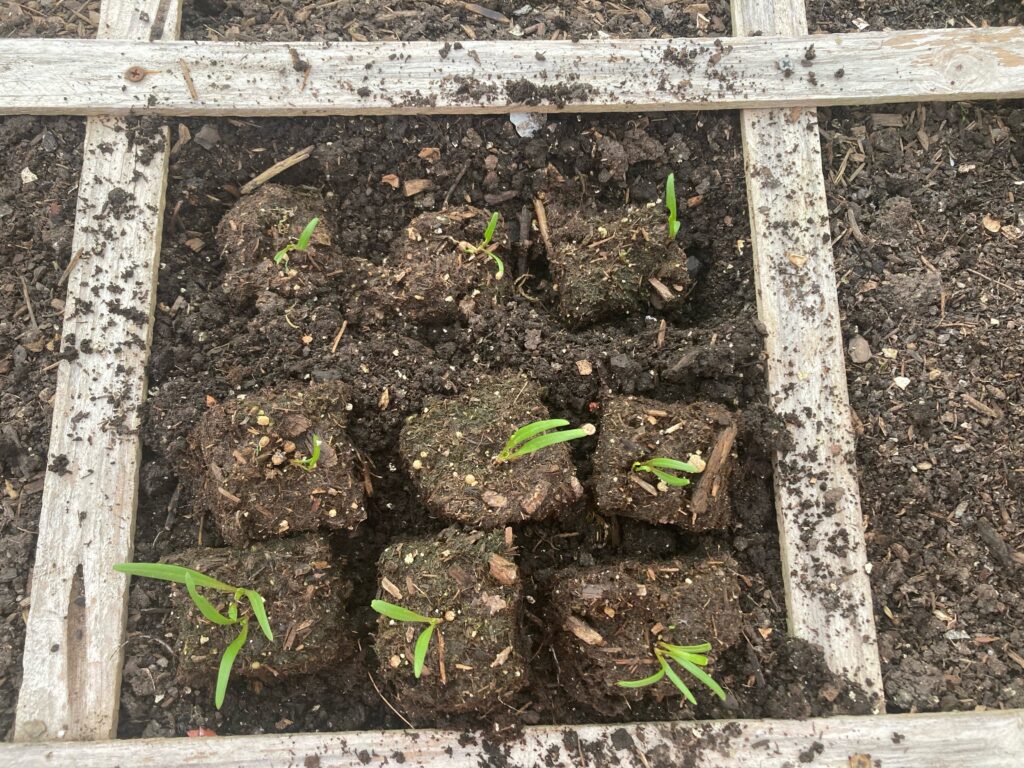
We had our 2nd day over 60 today and my garden is really starting to grow. I got home from work today and inspected my gardens. It was dry-even though it got a good watering this morning. This happened because of the wind-which really dries your soil out. I’ve come to learn just by looking at the color of the soil if it needs more watering. I think I’ll take a video of this so that I can show you what I mean. So I re-watered and planted a few things. Here’s a list of the items I’ve got growing at this time: 6 different kinds of lettuce, radicchio, arugula, spinach, swiss chard, radishes, pac choi, carrots, kale, mache, cilantro, parsley, tomatoes, brussel sprouts, mizuna, kohlrabi, and tatsoi. Everything is looking very good at this point. I’ve tasted the baby leaves of mizuna, arugula, and tatsoi and they are outstanding. It’s a lot different than lettuce, but it adds quite a bit of texture and flavor. You can see how nicely things are starting to fill in by this picture. This is spinach-and everybody discovers what variety is their favorite. “Space” is ours-the taste is excellent and like all spinach, is easy to grow. I’m still amazed at the prices some of these organic stores are charging for produce and veggies. Learn how to do it for yourself and save the big bucks at the checkout stand. You can learn how to grow a great garden with many different methods, but you won’t find one as simple as the square foot garden method.
Composting through winter
I probably should’ve put this post in before winter started. I live in zone 6 and we’ve had a hard winter. Lots of snow, cold, below zero temperatures, little sun, etc. Throughout the winter I continually add kitchen scraps to my compost bins . One of the tricks to having compost early in a zone such as ours is to not water your compost at the end of the last season. When you do that and have the kind of winter that we’ve had, your compost pile will be frozen solid. It’ll eventually melt, but it’ll take a lot longer to be able to work the pile. By not watering-in your compost additions the previous fall, your pile won’t be frozen and it’ll look like this. Totally workable. You can still chop things up and mix things around. It won’t be doing any true composting during this time but the minute the weather start to change and you start getting sun and warmer temps, your compost can start to be worked. If you had dumped water on it last year you wouldn’t be able to do that for several more weeks. Just a little trick that I do so that I can some finished compost a little earlier.
Fun stuff in the garden
Went out earlier this morning, pulled off the floating row cover and looked at my plants after a 12 degree low last night. I wasn’t sure what kind of damage I would find to my plants but everything looks really good. That’s tatsoi on the left-a great tasting Asian leaf for salads or even better for stir-fries. On the right is Simpson Elite-a standard lettuce we enjoy growing because of its taste and simpleness to grow. After this evening we will have low temperatures in the mid 20′s for the next 10 days. It looks like spring is on it’s way. And by the time my friendly neighbors have their gardens dry enough to rototill-which I never have to do-we’ll be well into eating what we’ve been growing. Lots of fun-the easy way-square foot gardening.
Early spring season starting
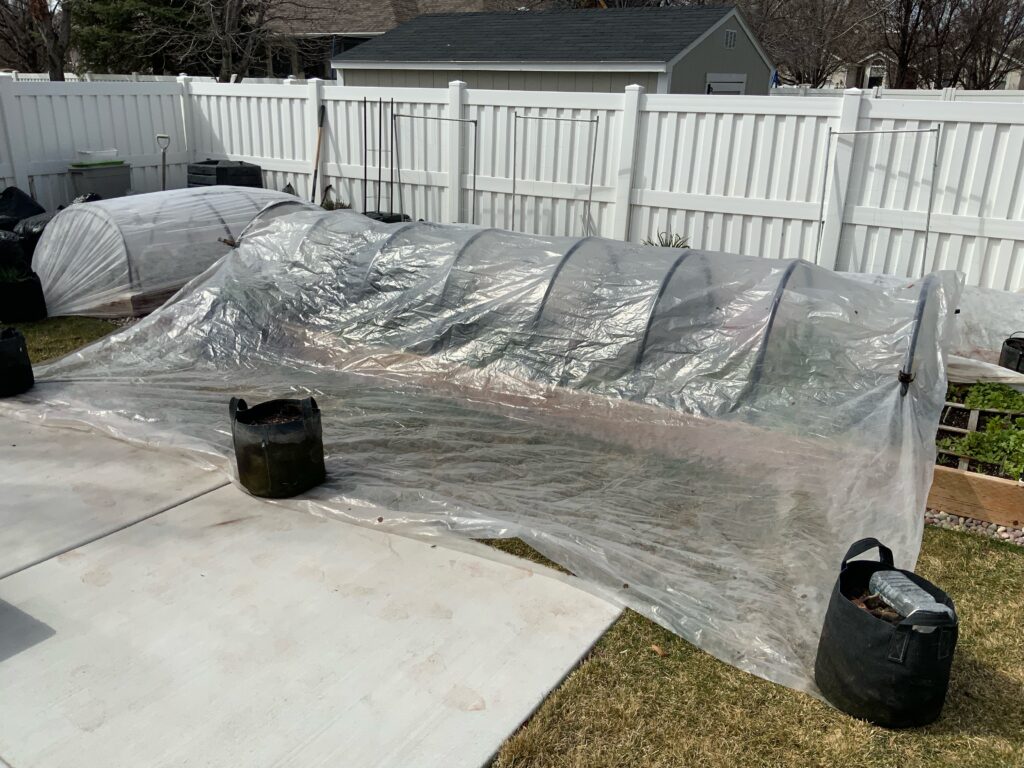
It’s all about bed preparation for me right now. This shows my SFG beds covered in plastic. The first bed in the foreground, which isn’t covered, is my asparagus bed. No need to cover that. Then you can see my 2X16 bed on the left, my 4X16 bed on the right, followed by my covered leaves. You can’t see what’s behind that-an uncovered 3X3 strawberry bed, but then you can see a covered 4X4 box. If you look hard enough you’ll see a tomato tower in the back. That’s a 1X4′ box that I use for 8 heads of lettuce and vertical crops like tomatoes, pole beans or squash. That’s covered too. I’ve got a bunch of things ready to go out into the garden, but a few of the boxes aren’t quite ready yet. These were the boxes that were in the shade all winter and have been de-thawed in the past week or so. I’m holding off on putting anything in the garden right now. Starting tomorrow(Tuesday)we have snow in the forecast for seven days straight. I was starting to get bothered about this, but I have to remind myself, it’s still February. What a bummer. I’m thinking after that we should see a marked improvement in the evening temperatures. So right now I’m sprouting all kinds of lettuce seeds, pac choi, arugula, radicchio, and swiss chard. My two early tomato plants are about 8 inches high right now and looking very good. They’re especially made to grow in greenhouses, which these will go into later this week. In a couple of weeks I’ll be starting to post youtube instructional videos. I’ll start at the beginning and move on from there-how to construct a good box, gathering items for the compost bin, making the perfect soil, making a grid, etc. I hope you’ll come back to visit.
It was hot!
I’ve been using a different weighted plastic this year to get me through the winter. Usually I’ve used a 6-mil plastic but now I’ve got a heavier duty commercial plastic covering my square foot gardens. The sun came out early today and it was 43 when I got home from work. I’d been used to plastic covers increasing the temps about 30 degrees warmer than the outside air. The thermostat showed about 82-a 40 degree increase. There’s a lot of things that can grow at that temperature, and the things growing under there right now probably aren’t the ones that can. I had to make sure that I vented it-in this case I just pulled the plastic off about half-way so it stayed fairly warm underneath but protected from the wind. So far things are growing nicely under the plastic-regardless of the harsh winter we’ve been experiencing.
Some of the greatest tasting lettuce ever
On the recommendation from the folks at Johnny’s Selected Seeds, I was convinced to try this variety of lettuce 2 or 3 years ago. They commented that this was one of their most popular and best tasting lettuces they sold, so I tried it. Our family loved it, and so did those customers I grew it for. In fact, it’s become my most requested lettuce of the growing season. It’s a variety called Skyphos. It’s not a warm-weather lettuce so it won’t do well in the middle of summer. But it’s easily grown in spring and fall. As is typical with the square foot gardening method, there will be four heads of lettuce per square. This was not planted with transplants or sprouted seeds. This was part of the original test to see if I could grow this in what has now been described as the coldest January in Salt Lake City in 50+ years. It was directly-seeded right into the soil. It’s grown a little slower than I would’ve liked, but that’s to be expected with hot cold it’s been. Six weeks away for this to be ready. JSS has a brand new variety of lettuce this year that’s supposed to be even better-something called Salanova. I’ve got my seeds ready to plant with that go for in a few days.