Author Archives: Jim

About Jim

I'm a certified square foot gardening instructor that enjoys teaching others how to grow their own great, healthy, organic food. I also enjoy cooking, biking, playing my guitar, reading, and card magic.

Square Foot Gardening-the only way to go

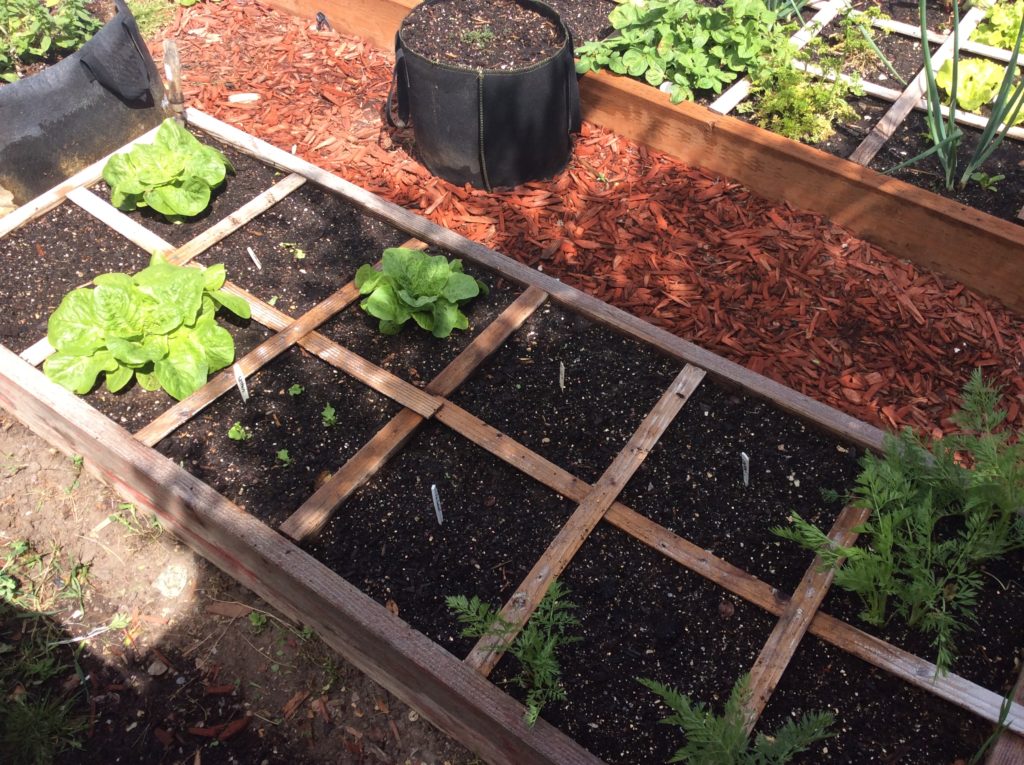
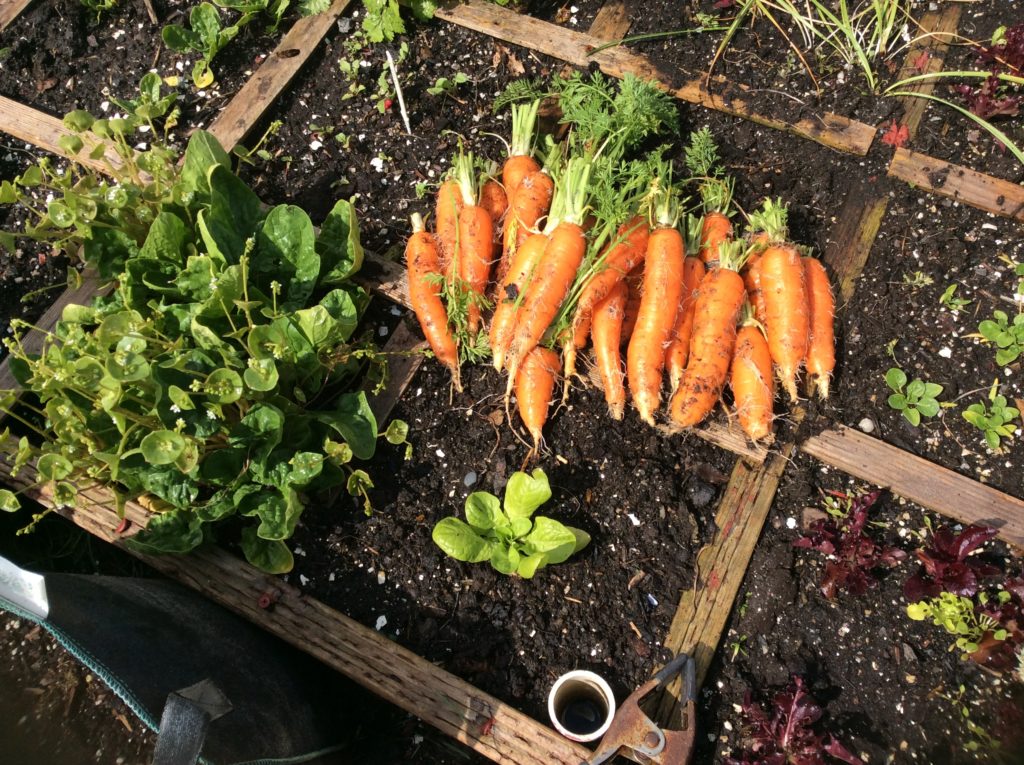
No wasted space, no wasted seed, hardly any work, no thinning, and no weeds! Here’s an example of growing what you actually eat. There’s really no sense in planting your entire gardens at once. Why do that? All that means is it will come up at once. At some point these 12 squares will be all lettuces. You can see its a shaded area so I use this bed a lot in the summer to especially grow salad greens. By not planting it all at once, you can see how I’ll have a steady supply of salad greens for a while. Each square is at a slightly different stage, a few haven’t even been planted yet. You can also see the very last of my carrots that over-wintered in this box. I had over 200 of them in there.

Speaking of lettuces, my favorite thing to grow, warm weather is just around the corner. Once outside temperatures go beyond 75-80, it becomes next to impossible to even have lettuce germinate in the garden. We have temperatures in the high 90’s and even a few days of triple digits, yet I’m able to easily grow lettuces right through the summer. I wrote an ebook about how to successfully do this. Check it out.
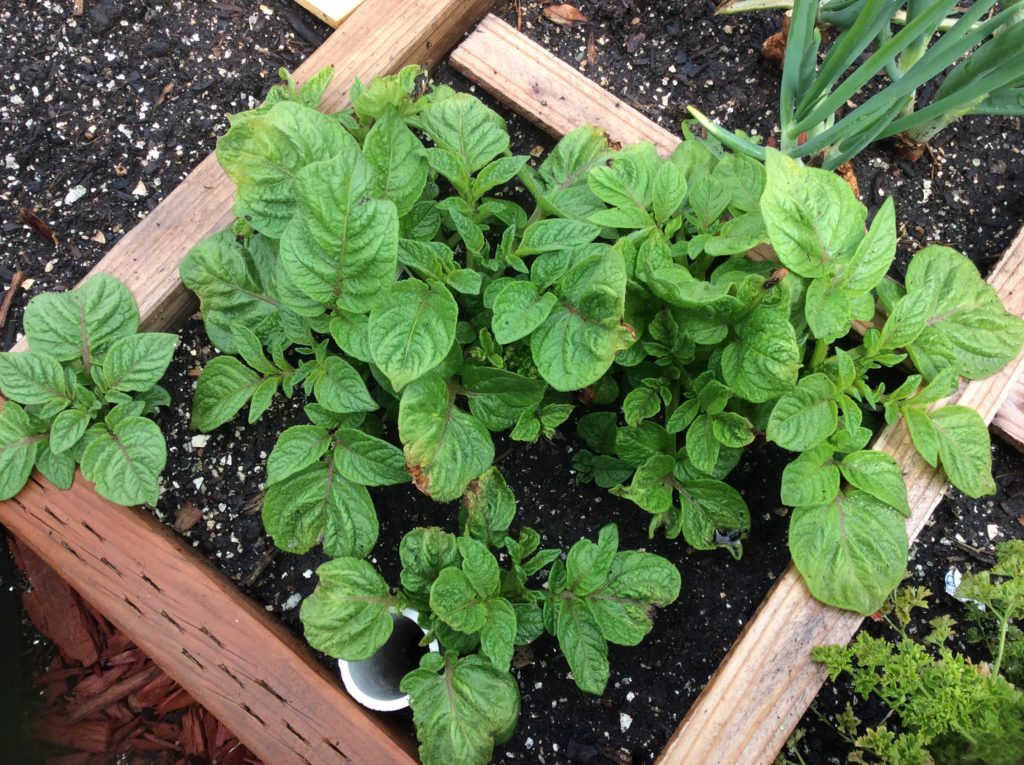
Potatoes in the square foot garden

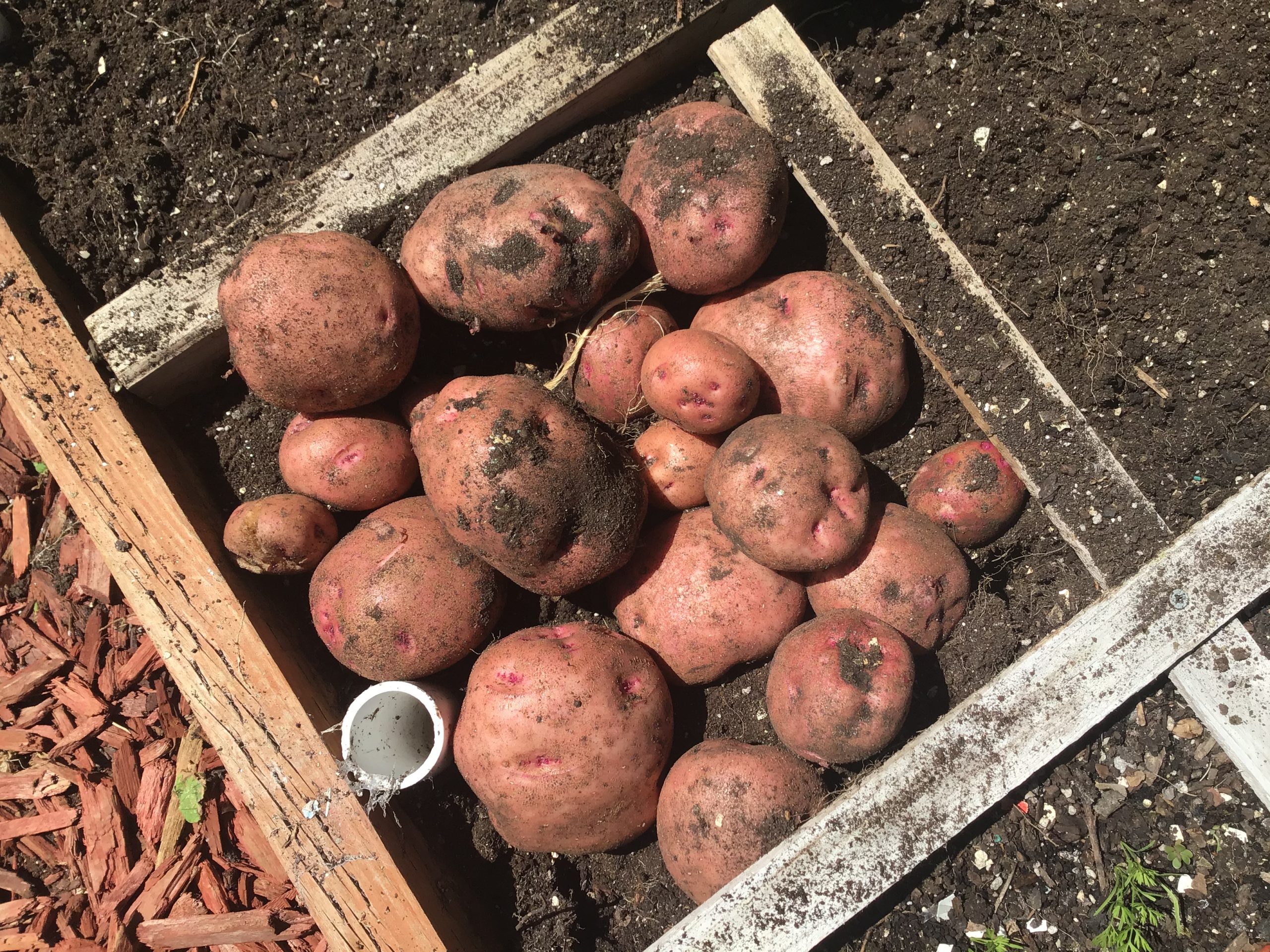
I don’t think I’ve ever posted about potatoes. If I have, it has been a while. The basic spacing of 1, 4, 9, and 16 in the SFG system is excellent, but with potatoes, I learned to change that up. Potatoes are planted 5 per square, and I always make sure each seed has at least two eyes in them. I do not hill. I do not let them scab over before putting them in soil. I just bury them 7-8 inches deep, cover, and start watering. In about 5 weeks they break the surface. I’ve grown potatoes in grow bags before, but I’ve never been able to match the yield than I can when planted in the square foot gardens. The soil really makes a difference. How much can you expect? I always harvest 5-7 pounds of red pontiacs every year. And the taste. 

How many carrots can you grow in 1 square foot?

SFG instructors usually teach 16, and for the beginner SFG’er, thats a good way to start. After a while, you continue to learn how to make your SFG even more efficient. There’s 25 of the sweetest, overwintered carrots you’ll ever taste right there. I’ve got a few more left and thats it for the winter carrots. The summer carrots will be direct seeded in about another 2 weeks or so. They don’t taste as sweet as these but still better than what you’d get at the super market. These are Napoli’s, and they are very good.
Give a look at the two classes I’ve got coming up in the next little while. Learn how to be a great square foot gardener, and then learn why Mels mix is a one time expense if you want to make your own compost. Just a few things to learn and you’ll be off to the races. You can’t buy fertilizer as good as you can make at home. And, it’s not even close.

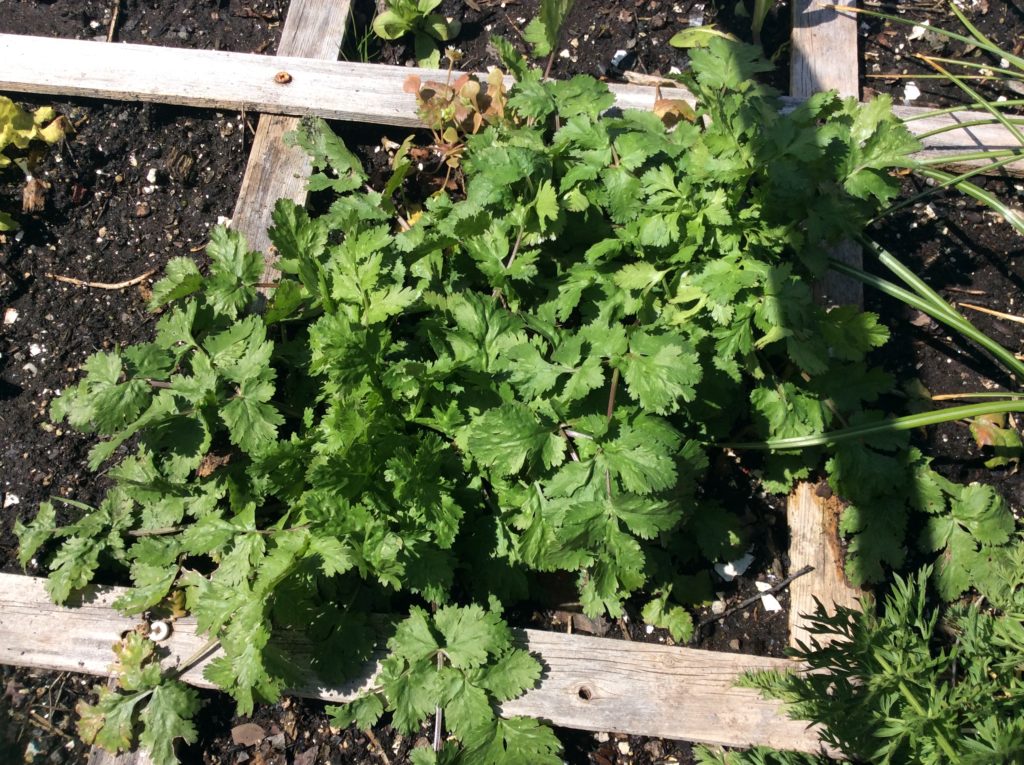
Cilantro in the square foot garden coming out of winter

I’ve heard many people during classes mention the fact that they have a hard time growing cilantro. When did you try to grow it? “In June or July.” Well, thats probably the reason. Cilantro grows much easier in the cooler climates of the year. If you start it in mid-fall, it will even do well in the protected environment of a low tunnel, where you can harvest throughout the winters in our zone 6B. This particular crop of cilantro has been in the garden all winter, and still has a way to go before I’ll empty the square and replant with something different. 

For those interested, I have a first time class coming up in 2 weeks. Titled “The Doomsday Garden” šŸ™‚ , this class is virtual. I’m hoping everything will work with the technology. The walk through went okay, but you know how things like this can go. This is the perfect time to get back into gardening. This method requires less work compared to other systems with so many other advantages. You can find information out about the class here on my blog. We’ll cover the basics of how to get your gardens up as fast as possible, and hopefully to reduce a bit of stress with the anxiety this has created for us all. 

Night time visitors

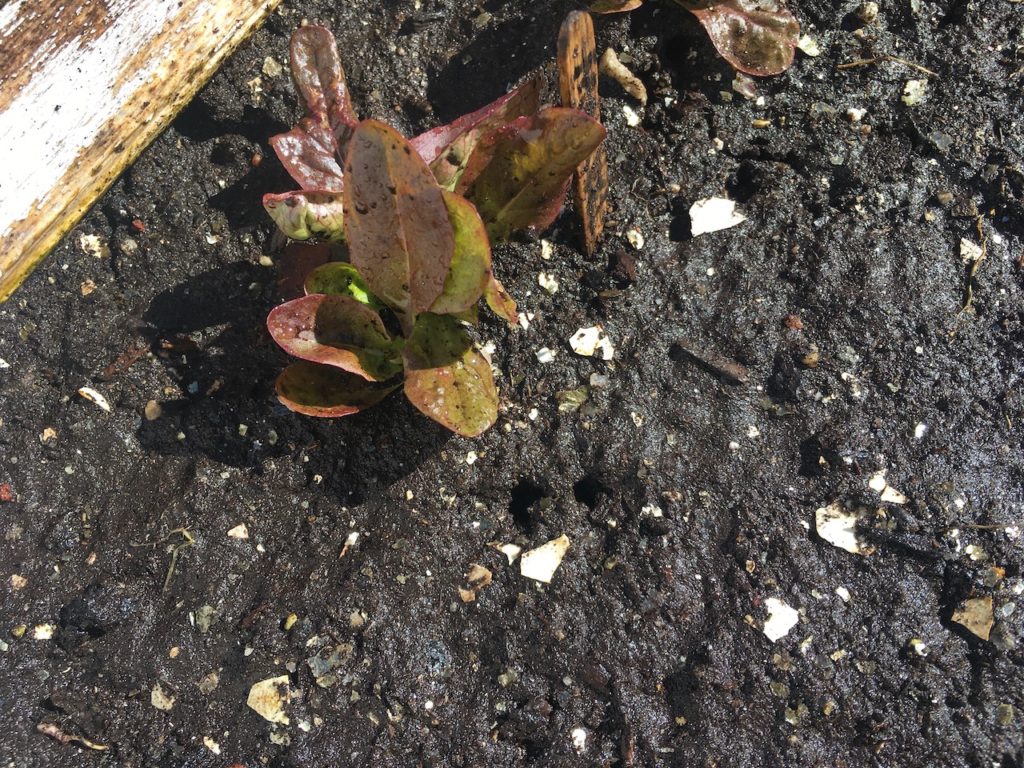
You come out in the morning and do some poking around the garden. Looking more closely at things, you notice these small little holes in your soil. Many gardeners know what this is but for the new gardener, this is very good news. You have earthworms visiting you at night. They are helping to turn your soil, aerate, and fertilize. They are very good visitors to have. Occasionally you might visit your garden with a flashlight and notice something move very quickly out of the corner of your eye. You look, and it’s gone. But you’ll see the hole they went into, and you’ll then realize what it was. Fun stuff going on all the time.