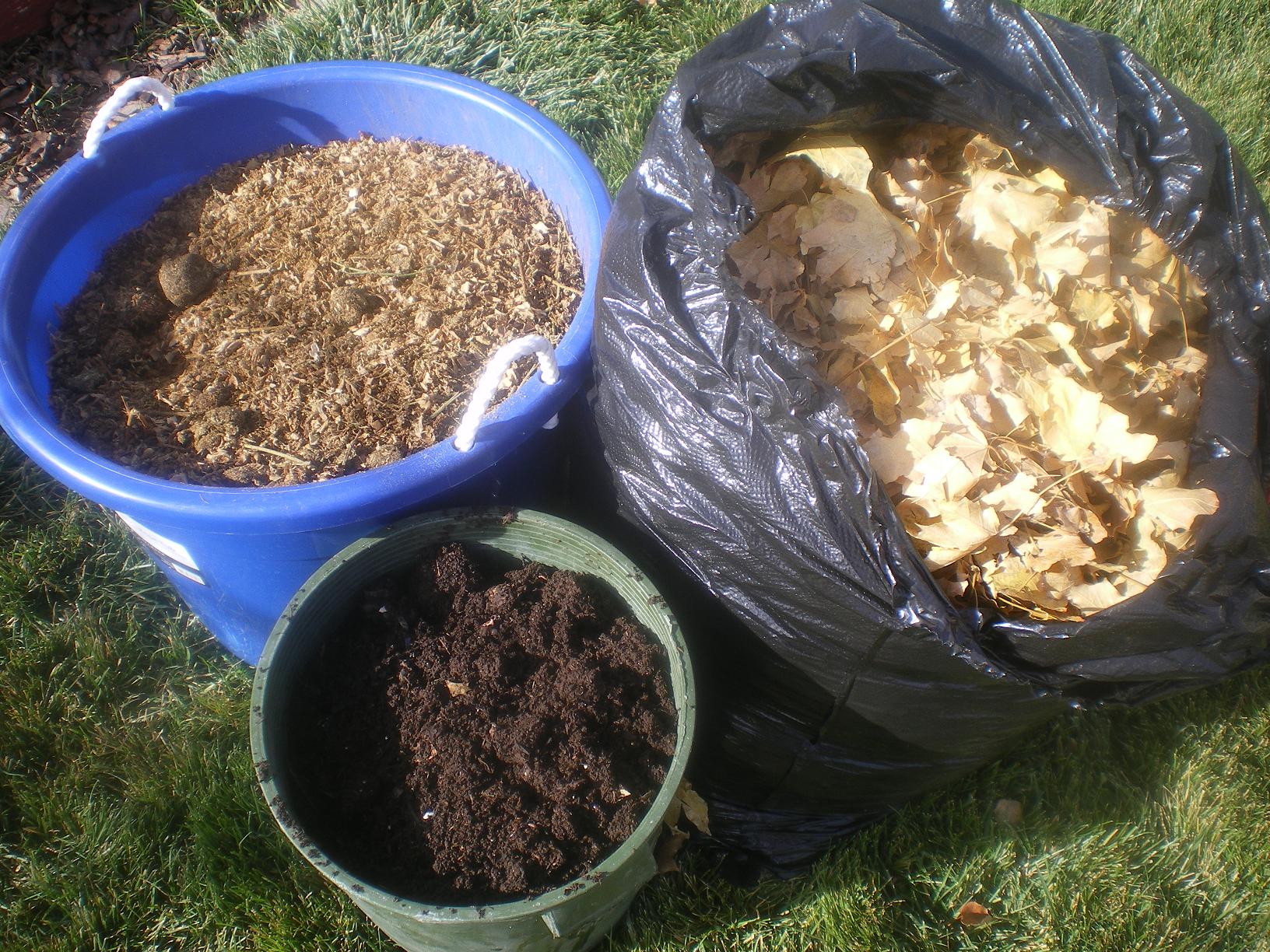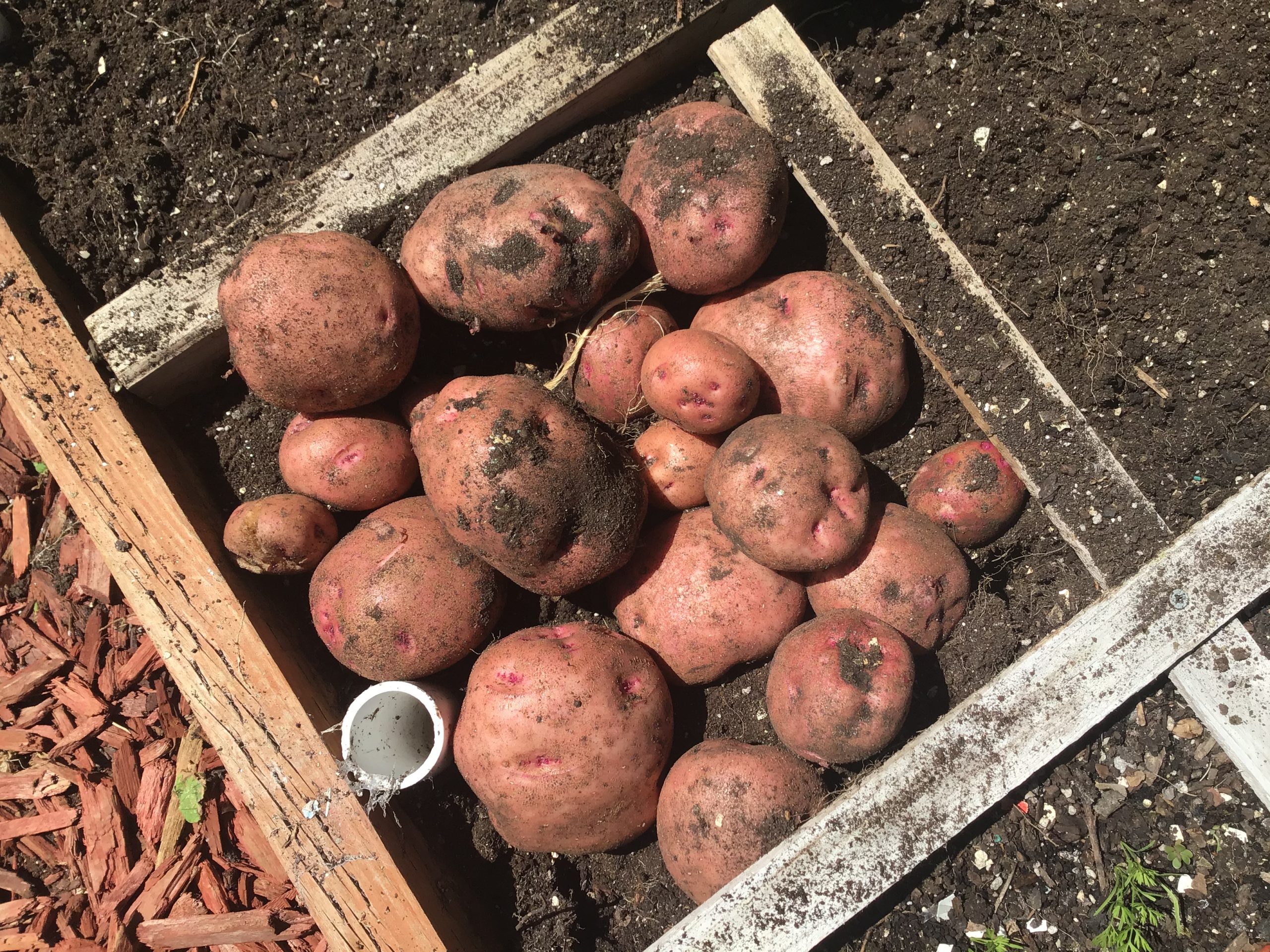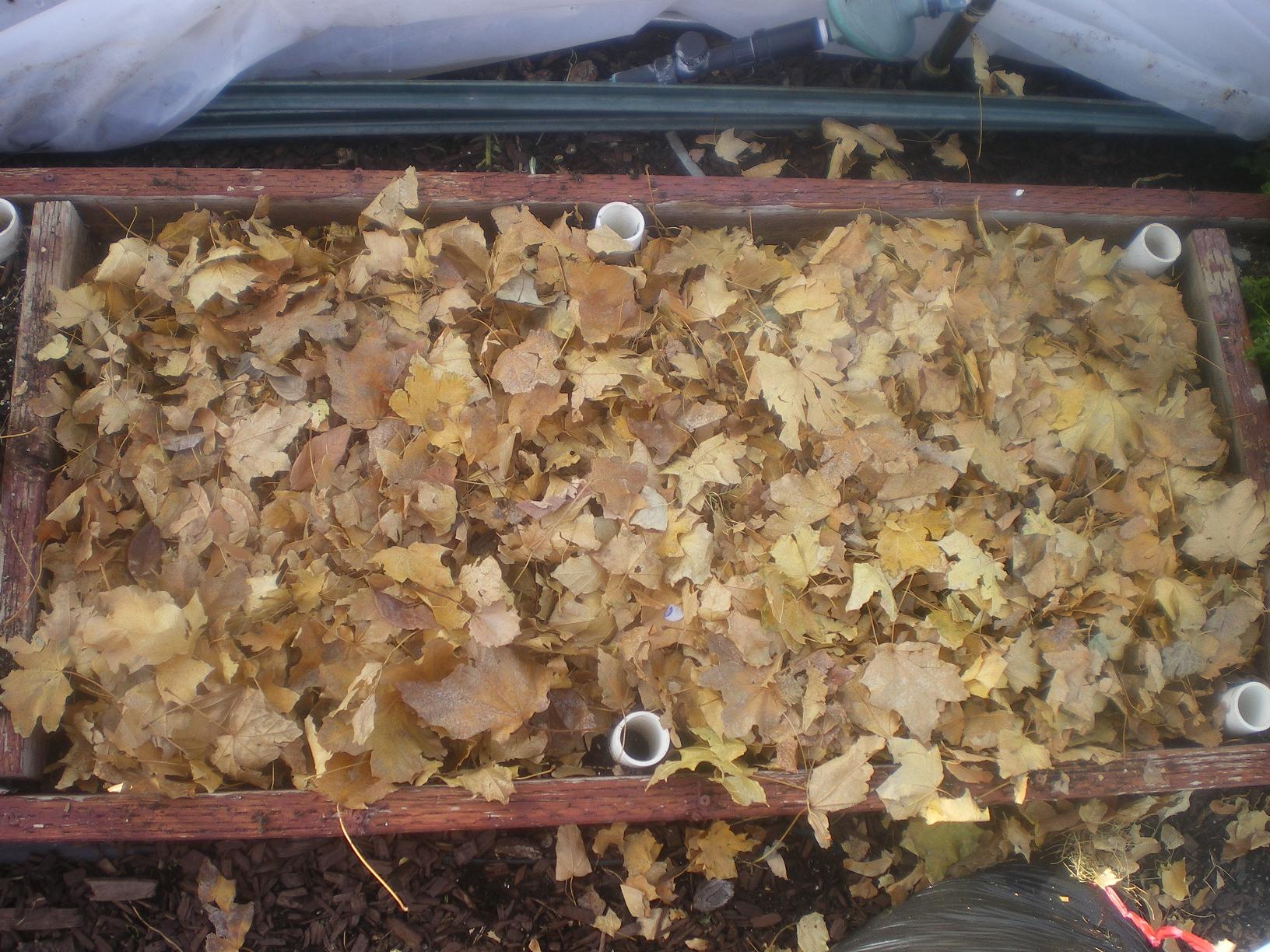
This is just another look at how I prep my soil for the next year. As mentioned in the previous post, I only use 3 things: leaves, manure, and my homemade compost. After removing the plants and roots, I make sure to really clean out the entire box-especially all the corners as this is where little critters love to hid for the winter. Then I remove several inches of Mel’s mix to make room for the amending ingredients. This picture is the first thing I add and it’s a pretty heavy layer. I then add a thick layer of horse manure followed by compost. All the leftover soil I have is then piled up in the box so that it’s actually higher than the box in the middle. After warming the soil and fluffing it up in the spring, I’ll have a fair bit of extra soil because of this. I’ll store this soil in a protected and covered bucket. This then becomes my soil amendment after my first harvest in early spring-which is too early for me to produce compost in Utah. I’ll still have several weeks to go before I can make a good batch of compost during this early part of the season. It works out perfectly. Just some ideas for you.[ois skin=”below post”]
Author Archives: Jim
Preparing the soil for spring
This is the method I’ve used for 13 years in my square foot gardens. It’s worked perfectly every single year and one of the greatest things is that it’s all free! At the end of the season you’ll notice that you lose volume in your SFG boxes. This is because the soil in a SFG is made up of at least 33% compost. It continues to decompose and breakdown over the course of the summer and your job at the end of the season is to build it back up again. I’ll post a couple more pictures in the coming days so you can get a look at how the process looks but it’s all very simple. The first thing I do is empty as much of my finished compost as I can and put this in a container(bottom item in picture.) I’ll then get my bucket of horse manure and a bag of leaves and put them right next to the SFG box that I’m preparing for spring. I empty my garden box of all garden waste and put it in my compost unit. I then loosen up the existing soil, level it all out, add a big layer of leaves followed by a thick layer of manure. It’s true that this manure is not finished, but that doesn’t matter so much in the winter when your not going to be growing anything for several months. That would not be the case in the growing season though as you’d want to avoid using unfinished compost. This unfinished compost would heat up too much and burn whatever you’re trying to grow. After that I add my last layer of compost. I’ll add enough of all these ingredients so that it will be 4 or 5 inches higher than the box in the middle of the box. Through the winter it will rain, snow, hail, sleet, and freeze. It will also get sunlight. It depends on how I feel, but I generally start to warm my boxes up by the first week of March. Covering my boxes with plastic will have them ready in about 4 or 5 days. At that time I’ll go and uncover the boxes, fluff everything up, and virtually all those leave will be gone. My soil is now perfect to grow whatever I want to grow. It’s been given everything it needs from leaves(carbon), manure(nitrogen), and compost(a rich mix of nutrients made of both nitrogen and carbon.) This is a great and simple way to prep your SFG boxes. Your soil is now on high dose steroids! Not really but you get the point. If you’re not making your own compost, you really should give it a try. It’s doing a lot more than just reducing landfill. Compost done right in your backyard will be superior to any commercially purchased bag of compost.
[ois skin=”below post”]
Potato winter storage
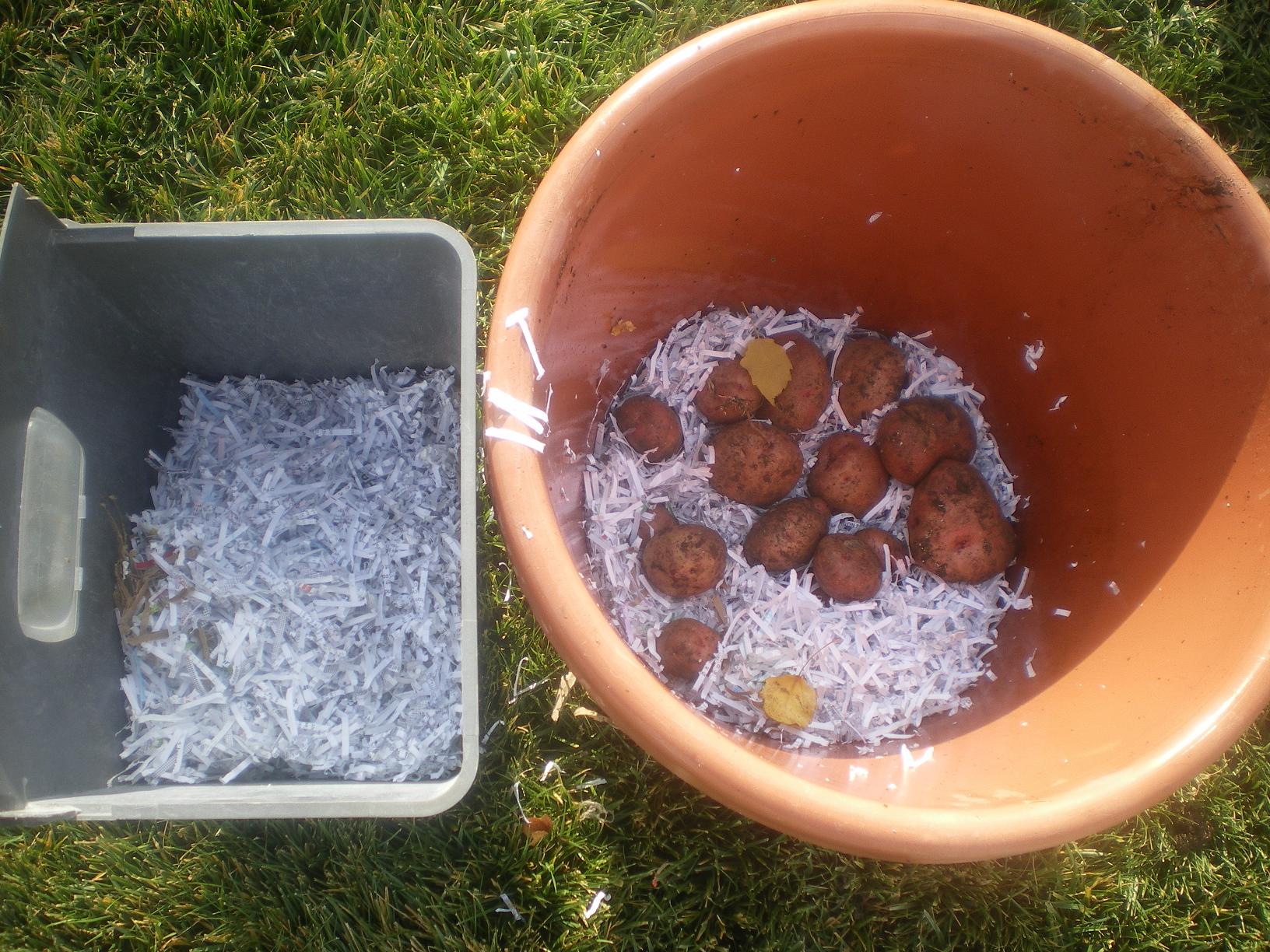
I thought I’d leave a quick note on how I store my potatoes to last through the winter months. We always finish them off before the end of winter, but it’s a real bummer to go through your potato bin only to find soft, diseased and ruined potatoes. My method is like everything else I try to do with gardening-quick and simple with a minimum of work. After pulling potatoes from the ground, try to store them at room temperature for 10 days or so to let the skins dry out enough to prevent moisture loss. Your storage area should be protected from light as much as possible or they will develop solanine. You’ll know this by the green coloring on the surface of the potatoes. If you see this be sure to throw the effected potatoes away as they can cause illness. If you’re lucky enough to have a root cellar you can store your potatoes in any crate, bin, or open box not exposed to sun. If not, store potatoes in a cool, dry room where the temperature doesn’t get below 35 degrees. Storing potatoes in cooler temperatures than this increases their sugar and decreases in starch which take away from their storage and cooking qualities. All I use to store my potatoes are a large enough bin to hold them all and shredded paper. I start with paper on the bottom, than add a layer of potatoes, then another layer of shredded paper, then potatoes, etc. I’ll do this until I reach the top of my container and all the potatoes are covered. This works great because they are protected from any sunlight and any excess moisture is absorbed by the shredded paper. I then keep them in our garage. Whenever we need potatoes, it’s an easy thing to go out, dig through the paper, and gather your potatoes. In the square foot garden system, I’ve been able to expect 5 pounds of potatoes per square. Growing 8 squares gives us 40 pounds of them to last-well, as long as we can get them to last. In my next post, I’ll be taking some time to talk about something that I’m getting a lot of mail about-preparing the soil in fall for the spring gardens. It’s what I’ve done for years and it’s worked perfectly. Stayed tuned.[ois skin=”below post”]
Halloween SFG
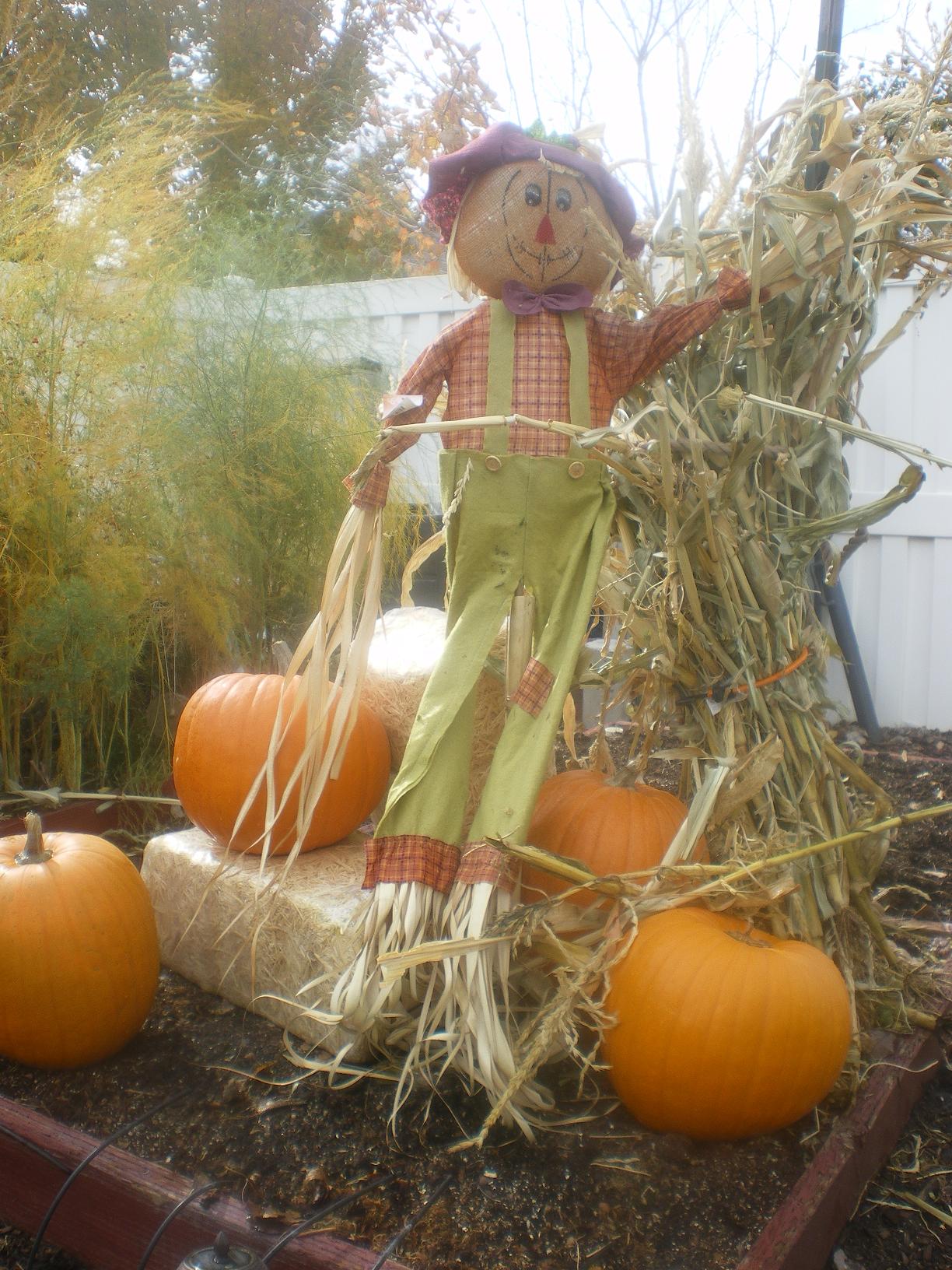
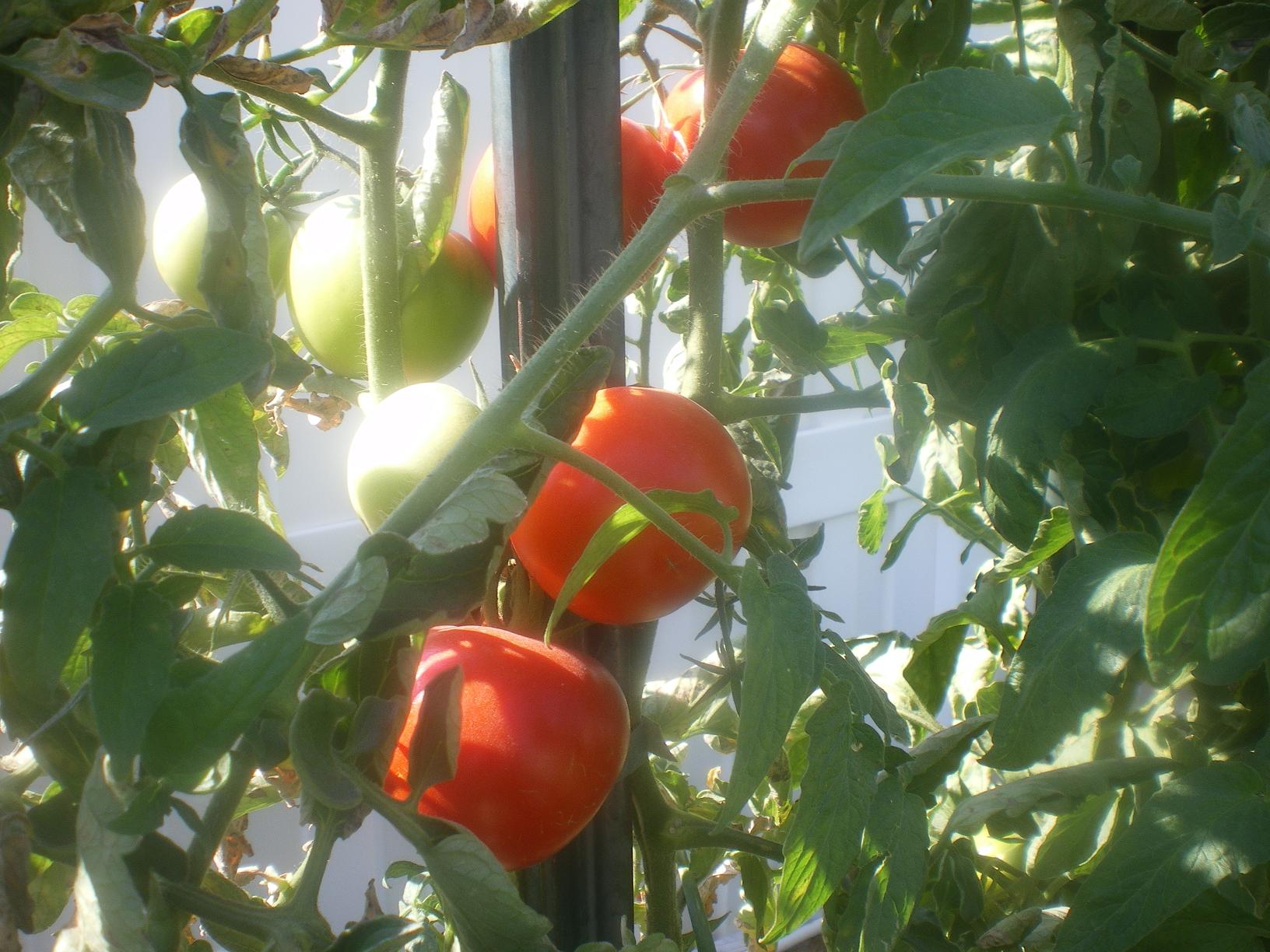
We had our first snow last night. Whatever has been in the garden up until this point is now done except for a brussel sprout plant and a couple squares of lettuce. The first thing I do when I get up in the morning is take a quick peek at my garden-I even do it in the dead of winter-I don’t even know why I do it. Since it’s the Halloween season, I thought I would put a little holiday decorations in the garden to match the season. It’s not a lot, but it’s fun. My wife says “but nobody will see your garden!” Maybe-but I will. It was quick, cheap and easy to do. In a couple of weeks, I think I’ll decorate with a Thanksgiving theme followed by a Christmas theme shortly after. That way when I look at the gardens in snow, it wont’ be so boring. I don’t know if I will be gardening all winter now-I need a break from the season. Maybe I will only do 1 small SFG box, we’ll see. My squashes are hardening up in a dry place, as are my onions for winter storage. I will be digging up my potatoes in the next 4 or 5 days and putting those away for the winter. I’ll talk about how I store my potatoes in the next post. It’s important if you don’t want them to rot over the winter. My carrots and beans have been blanched and put in the freezer, along with my whole red tomatoes. Maybe I’ll include what I do with my tomatoes at the end of the season to preserve them. I can’t take the time to process all of them so I take the easy route.[ois skin=”below post”]
Why we have so little pest problems with a SFG
Several weeks ago at a local library introductory class I had a question. It was a question that I couldn’t answer. This was the question:”How do you stop spider mites?” It was a little embarrassing to admit “I don’t know.” But it was the truth. I haven’t had spider mites or hornworms-another pest that I just learned about in the past couple of days. Why have I never had any of these? I think the answer is in the simpleness of the SFG system. By not planting any one thing in mass quantities in close proximity to one another we’re able to control or not have any spider mites. I try to remember where I’ve planted my big items in the garden from the previous year. I’ll rotate the location for squash, potatoes, pole beans, tomatoes, etc. It’s an easy task. I don’t know all the scientific answers to why we have so little pest/bug problems in a square foot garden. I’m guessing that it has something to do with rotation, and I’m also guessing that it might have something to do with the fact that I plant a different thing in each of my 16 squares of a 4X4′ garden box. There won’t be many who understand this one because you had to be there to experience it. I just returned from the SFG 3-day symposium in San Diego. Besides meeting 10 unbelievably great folks who are so passionate about the cause, I got to hear from Mel himself. He had the class stand up and spread their hands in front of them-palms facing each other. He then told them to raise their hands so that their hands were above their heads, and had them close their eyes. Then he asked them to slowly bring their hands together-with their eyes closed until they felt their hands touch each other. Then he asked them to interlock all their fingers-eyes closed. Then he says “raise your trigger finger of there right hand,” which represented “build a box.” Then he asked them to raise their other trigger finger, which represented filling a box with Mel’s mix. He’d have them raise one pinkie and that might represent “a different crop in each square.” The other pinkie might represent “build a grid.” He did this for 10 different things, then asked the class to close their their hands again in the original interlocking grasp. He then asked them to try to separate their hands, which they couldn’t. He finally asked them to lower their hands in front of them and to open their eyes. He explained to the whole class that square foot gardening is exactly like their interlocking fingers. Everything meshes together perfectly in a square foot garden. He said “I don’t even know why it works, but it does.” And he’s right. Having a square foot garden is so simple that any person desiring to garden can have one-and a very successful one without any experience. The concepts are perfectly aligned with one another so well that is just seems to work. To all the folks that just left San Diego, you know what I mean. It was great meeting everyone and I wish you all the best of luck. If you don’t have a square foot garden yet, come on over and join us.
[ois skin=”below post”]